Common Questions About Grease Interceptors for Commercial Kitchens
What You Need to Know.
What Actually Matters.
What to Do Next.
Grease Trap and Grease Interceptor Basics
1. How Does a Grease Trap Work?
If you’ve ever wondered how a grease trap works, the answer is simple.
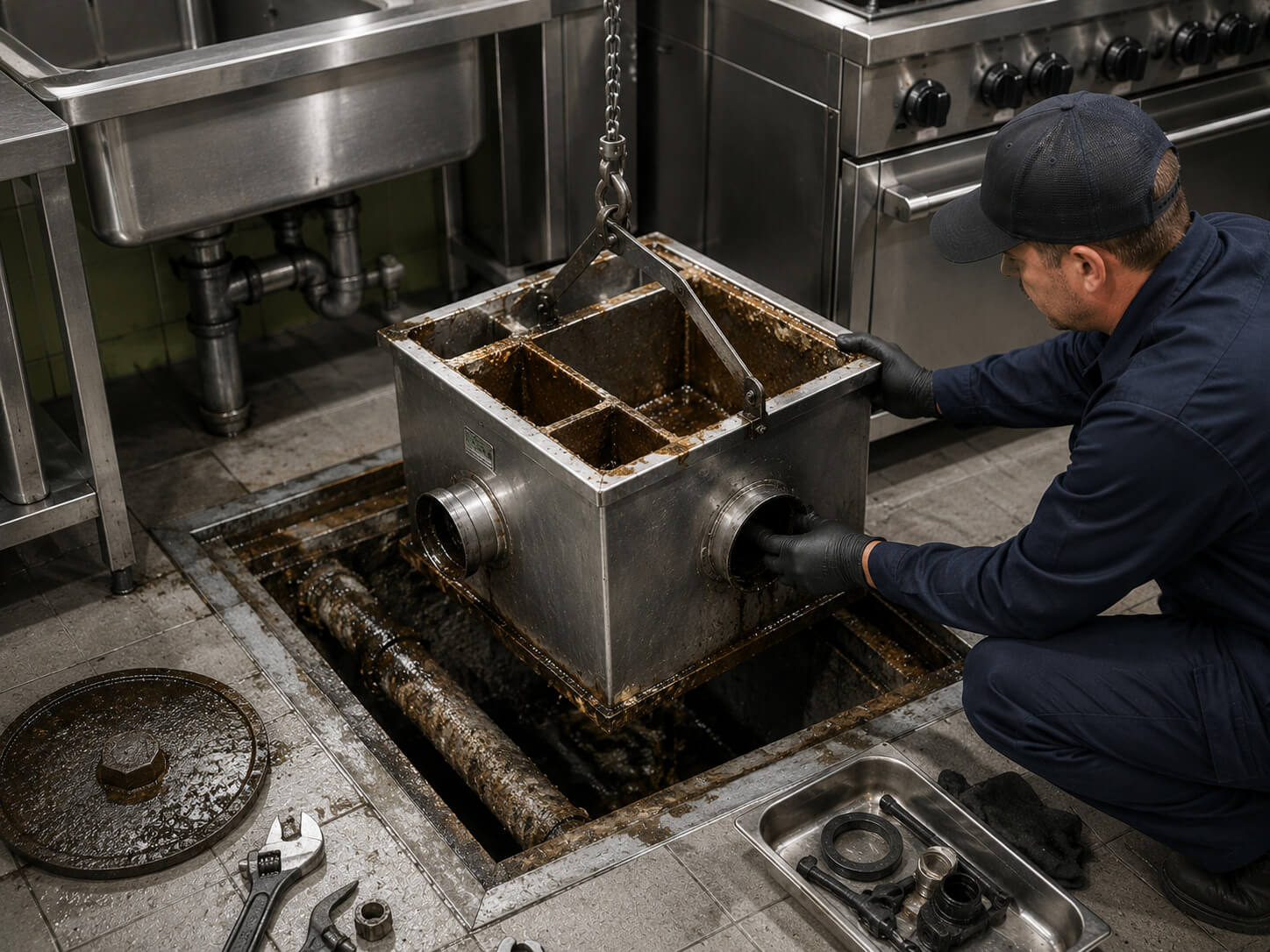
Wastewater flows into the unit. Grease rises. Solids sink. The middle layer of water flows out. The grease stays inside until it’s removed during service. Without routine cleaning, build-up restricts flow and causes backups.
2. What Is The Difference Between A Grease Interceptor Vs Grease Trap?
A grease trap is typically smaller and installed indoors. A grease interceptor is larger, usually installed underground, and designed for higher-volume kitchens. Both serve the same purpose. The difference is size, capacity, and placement. We service both grease interceptors and grease traps based on your kitchen’s needs.
3. How Often Should Grease Interceptors Be Cleaned?
It depends on volume.
High-output kitchens require more frequent service. Smaller operations may need less.
The goal is simple: clean before buildup becomes a problem. Routine service prevents backups and inspection issues.
4. What Happens If A Grease Interceptor Is Not Maintained?
Neglected grease interceptors can lead to:
- Drain backups
- Odors
- Health Code Violations
- Failed Inspections
Routine cleaning costs less than emergency repair.
5. Do You Provide Documentation After Service?
Yes.
We provide clear service records and documentation for inspectors and city requirements. If an inspection certificate is required, we help ensure your records are in order.
Drain And Maintenance Questions
6. What Causes Kitchen Drain Backups?
Grease, food waste, soap residue, and debris build up over time.
When grease solidifies, it traps other materials and restricts flow. That’s when slow drains and floor backups start.
Routine hydro-jetting prevents that buildup.
7. How Often Should Drains Be Hydro-Jetted?
High-volume kitchens often benefit from annual service. Some require more frequent cleaning.
Hydro-jetting clears full pipe walls, not just partial blockages.
We recommend service based on your kitchen’s grease load.
8. What Is Included In Commercial Kitchen Maintenance?
Commercial kitchen maintenance typically includes:
- Grease trap cleaning
- Drain line service
- Hood cleaning
- Cooking oil collection
- Fire system coordination
Bundled plans simplify scheduling and reduce overall cost.
9. Is Bundled Maintenance Worth It?
Yes.
Bundling reduces:
- Vendor coordination
- Emergency calls
- Overlapping service appointments
It also centralizes documentation and makes inspections easier.
10. Can Maintenance Plans Be Customized?
Yes.
Plans are built around your cooking volume, inspection schedule, and equipment layout.
No cookie-cutter packages.
Fire Safety And Hood Systems
11. How Do You Prevent Kitchen Fires?
You reduce risk through routine cleaning and inspection.
That includes:
- Hood cleaning
- Removing grease buildup
- Maintaining fire protection systems
- Ensuring proper airflow
Grease accumulation is fuel. Removing it lowers risk.
12. How Often Should A Kitchen Hood Be Cleaned?
Frequency depends on cooking type and volume.
High-grease kitchens require more frequent service to meet commercial kitchen hood cleaning code requirements.
Routine service protects your system and your insurance coverage.
13. What Is A Commercial Kitchen Fire Suppression System?
A commercial kitchen fire suppression system is designed to automatically discharge fire-suppressing agents over cooking equipment.
It works alongside fire sprinklers and may be tied into building alarm systems.
These systems are required by fire codes.
14. Do You Maintain Industrial Fire Suppression Systems?
We coordinate service and support for industrial fire suppression systems used in commercial kitchens.
Our focus is ensuring documentation and readiness for inspection.
15. What Happens During A Fire Safety Inspection?
Inspectors review:
- Hood cleanliness
- Fire suppression system condition
- Service documentation
- Compliance with fire codes
Clear records and routine maintenance make inspections smoother.
Oil Disposal And Compliance
16. How Do You Dispose Of Grease?
The answer is: not down the drain.
We provide scheduled cooking oil pickup and proper grease disposal. Used oil is collected and sent for recycling.
17. How Do You Prevent Plumbing Problems From Oil?
Proper grease disposal and routine cleaning prevent oil from entering drain lines.
Disposing cooking oil incorrectly leads to clogs and backups.
Scheduled pickup prevents that.
18. Is Cooking Oil Collection Free?
Yes.
Pickup is free. In some cases, high-volume kitchens may receive payment depending on oil quantity.
We explain the details clearly.
19. What Documentation Do Inspectors Look For?
Inspectors often request:
- Service logs
- Proof of grease interceptor cleaning
- Fire system inspection records
- Hood cleaning documentation
We keep records organized and ready.
20. Why Work With One Company For All Services?
Compliance works best as a system.
One partner means:
- Fewer vendors
- Predictable scheduling
- Centralized documentation
- Lower long-term cost
When grease interceptors, drains, hoods, and fire systems are maintained together, kitchens run smoother and inspections become routine.

Still Have Questions?
If you need clarity about your kitchen’s systems, service schedule, or compliance requirements, reach out. We’ll give you a straight answer.