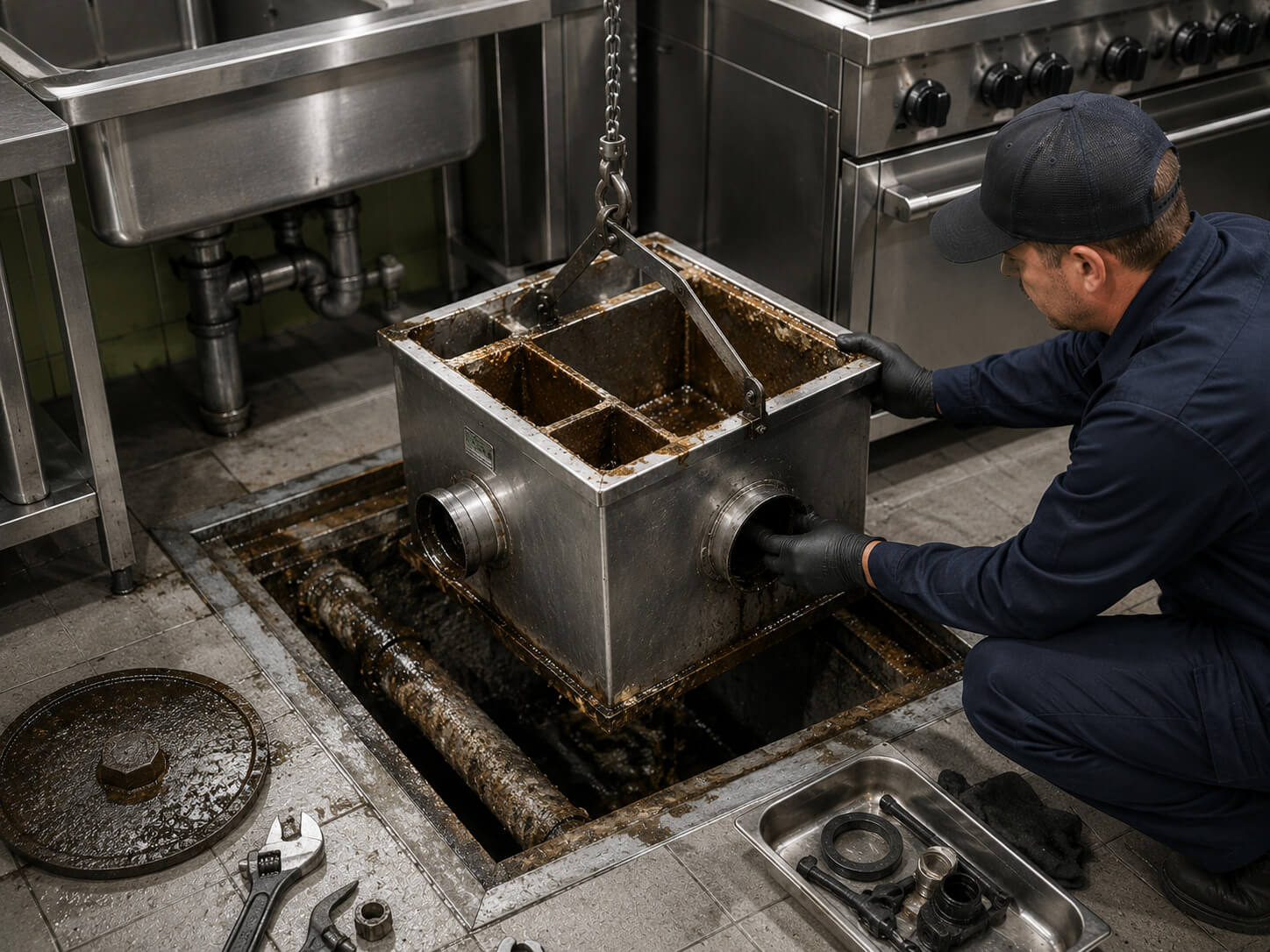
Grease trap cleaning for commercial kitchens focused on cost control, compliance, and disruption-free operations
Trap Overflow, Prevented.
Foul Odors, Eliminated.
Drain Flies, Gone.

Reliable Expert Service to Keep Your Kitchen Running
We provide grease trap cleaning based on your kitchen’s volume, system size, and service needs. Our team keeps recurring work organized, documents each visit, and lets you know when something needs attention.
Eliminate kitchen disruptions with predictable service, quick response on emergencies, and code compliance. Routine cleaning also helps reduce backups, foul odors, drain flies, and inspection concerns before they interrupt operations.

No missed service. No guesswork. Our certified technicians do the job right:
Show up as promised

Perform thorough grease trap pumping

Handle proper disposal

Provide clear documentation
Common Grease
Trap Problems
The visible problem does not always start inside the grease trap. Our technicians consider the trap condition, connected drain lines, flow, visible damage, and recent service history before recommending the next step. That helps avoid repeated service that treats the symptom without resolving the cause.
1. Why Is My Grease Trap Backing Up?
A backup may be caused by an overfull or heavily congealed trap, grease buildup in the connected drain line, a solid obstruction, root intrusion, or damaged piping. We determine whether the problem is likely to be resolved through grease trap cleaning, drain line hydro-jetting, or repair. You get the service that fits the problem instead of paying for repeated pump-outs that do not address the source.
2. Why Does My Grease Trap Smell?
Odors often develop when grease and food solids build up inside the trap or connected lines. Routine cleaning may remove the source, but persistent odors can point to slow drainage, trapped residue, or another issue farther into the system. We explain what we find and whether cleaning alone is likely to solve it.
3. Why Are There Flies Near My Grease Trap?
Drain flies are attracted to organic buildup and standing residue. They may appear near the trap even when the breeding source is inside a connected drain line. Our team looks beyond the visible area so the recommended service addresses the likely source, not only where the flies are being noticed.
4. What Other Problems Can Affect a Grease Trap System?
Grease buildup, damaged components, improper flow, root intrusion, and collapsed piping can all affect performance.
We explain:
- What we observed
- What is most likely causing the problem
- Which service should come next
- What requires immediate attention
- What can be planned for later
You get a clear recommendation without unnecessary work or guesswork.
Stay Ready Without Last-Minute Scrambling
A neglected grease trap can affect inspections, daily operations, and revenue.
Inspection Concerns
Visible buildup, odors, drain flies, poor drainage, and missing service records may raise questions during an inspection. Scheduled cleaning and organized documentation help show that the system is being maintained.
Sewer Backups
An overfull trap or blocked drain line can push wastewater into areas where food is prepared or served. Routine service helps identify buildup before it reaches that point.
Fines and Penalties
Improper maintenance, reporting, or disposal may lead to enforcement under applicable local requirements. We document completed service and handle required reporting when it applies.
Temporary Shutdowns
Backups, overflows, and unsafe conditions can interrupt kitchen operations. Even a short closure can lead to lost sales, wasted food, staff disruption, and emergency service costs.
GTC keeps recurring cleaning organized and service records available, so you spend less time preparing for inspections or searching for proof of maintenance.
No Missed Cleanings
Many grease trap problems begin when responsibility for the next cleaning is unclear or service gets pushed back.
We build the schedule around your kitchen’s volume, system size, usage, and service history. Whether you have a small under-sink unit or a large grease interceptor, recurring visits are kept under one organized service plan.
You do not have to:
Track every cleaning date
Contact a provider before each visit
Rebuild your service history
Wonder when the system was last handled
We’ve already shown you the expert level of care we provide for grease traps, want that same expert level of care across all your kitchen needs?
Complete Grease
Trap Service
Our grease trap cleaning service includes:
Full pump-out and cleaning
Grease interceptor cleaning for in-ground systems
Scraping and removal of solid buildup
Proper handling and disposal
Service documentation
City reporting when required
A visual check for signs of wear, damage, or improper flow
Each visit creates a clear record of what was completed and what, if anything, needs attention next.
You do not have to piece together notes from several providers. The cleaning, observations, documentation, and follow-up recommendation come from one accountable team. Used fryer oil requires a separate collection service and should never be emptied into a grease trap or drain.

Built to Prevent Recurring
Problems
Grease trap cleaning removes accumulated grease and solids, but it will not permanently resolve every backup, odor, or drainage problem. During service, we consider the trap condition, connected flow, visible damage, and whether the same issue has happened before.
If buildup has moved into the drain line, hydro-jetting may be the right next step. If the system is cracked, improperly sized, or structurally failing, repair or replacement may be more cost-effective than repeated cleaning. We explain the cause, recommend the appropriate service, and help coordinate the next step. That reduces repeat calls and keeps you from paying to address the same symptom again.
Fix Issues Before They Get
Expensive
During service, we check grease traps and grease interceptors for visible signs of wear, damage, corrosion, improper flow, or structural failure. If something needs attention, we explain:
What requires immediate action
Why it needs to be addressed
What can be scheduled later
What does not need repair
Which option provides the best long-term value
This gives you clear priorities and time to plan whenever the condition allows. You are not pushed into unnecessary work, and you are less likely to face a larger repair without warning. When immediate action is required, our team explains the issue and helps move the repair toward a solution quickly.
This gives you clear priorities and time to plan whenever the condition allows. You are not pushed into unnecessary work, and you are less likely to face a larger repair without warning. When immediate action is required, our team explains the issue and helps move the repair toward a solution quickly.

Fewer Emergencies.
More Predictable Costs.
Emergency grease trap failures are disruptive and expensive. Routine grease trap cleaning keeps maintenance more predictable and reduces the risk of after-hours calls, surprise bills, and lost operating time.
Bundled service plans can provide additional value by coordinating grease trap cleaning with drain line hydro jetting, hood maintenance, and other recurring services through one accountable team.